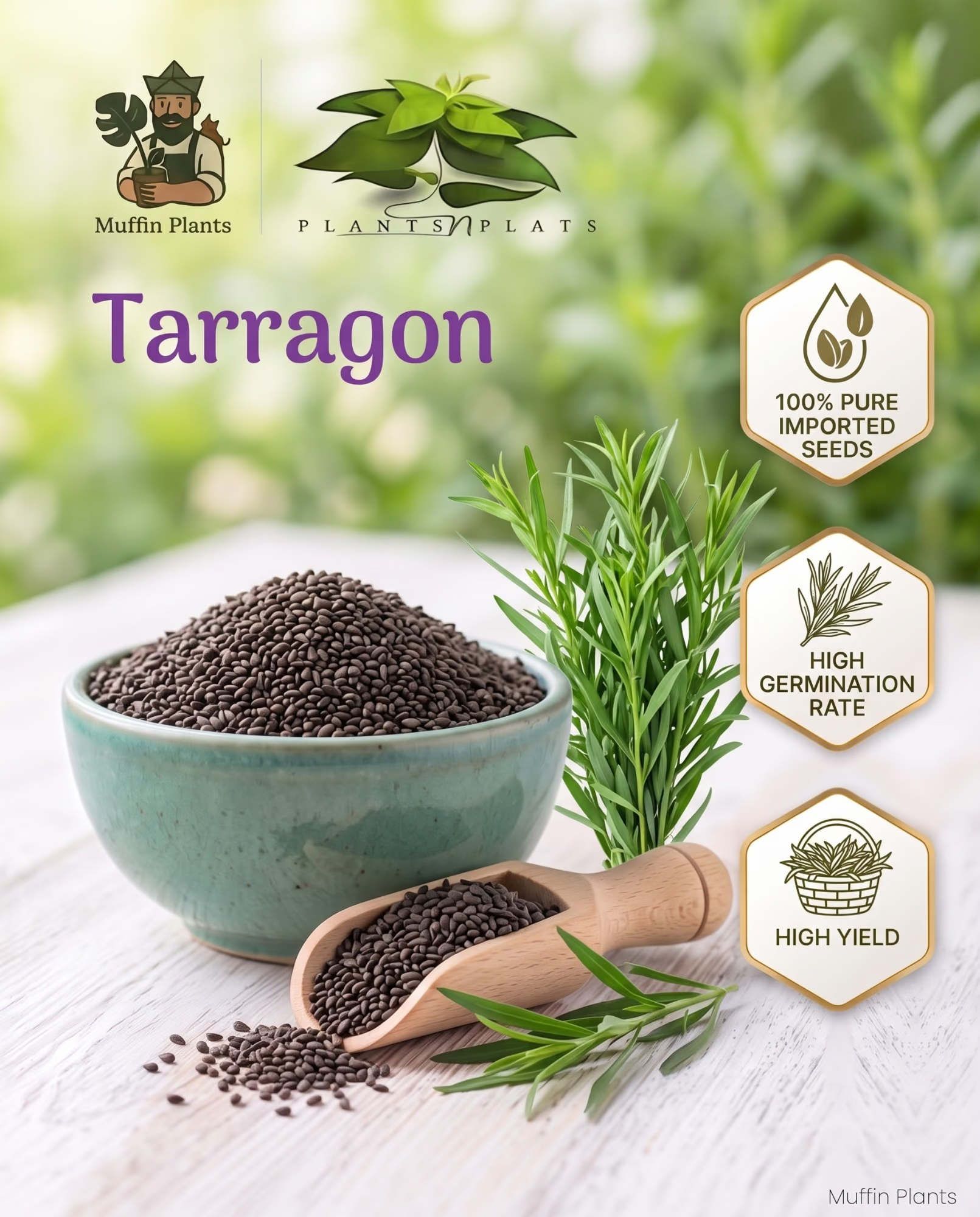
Seeds
An elegant, anise-flavored herb that elevates French cuisine and light sauces.
Tarragon features narrow, branching leaves that carry a distinct, sweet licorice flavor beloved in classic culinary traditions. It prefers well-drained soil and a sunny position, requiring very little maintenance once its root system is established. It is the signature ingredient in Bearnaise sauce and pairs beautifully with chicken, fish, and infused vinegars.
Light
Needs full sun, 6 or more hours a day, though it tolerates a little partial shade. A warm, sunny, sheltered spot suits it, with light afternoon shade in peak summer.
Water
Tarragon dislikes wet roots. Let the soil dry out between waterings, roughly once a week in warm weather and less in winter, and never leave the pot standing in water.
Humidity
Prefers dry to moderate air and does not like damp, humid conditions. Give it good airflow and a sharply draining pot in humid Karachi.
Temperature
Grows well in warm weather from about 10 to 35 C, and in 35 C+ heat it carries on in light afternoon shade with sharp drainage. Russian tarragon is hardy and shrugs off cold winter nights, so sow in early spring or autumn.
Pets and children
Safe to eat for people as a culinary herb. The ASPCA lists tarragon as toxic to dogs, cats and horses because of its essential oils, which can cause mild vomiting and diarrhoea if the plant is eaten.
Soil
Sandy, sharply draining soil that is low in nutrients and close to neutral in pH. Mix garden soil with coarse sand or perlite and a little compost, or use a gritty mix in a terracotta pot.
Fertilizer
Tarragon prefers lean soil and needs very little feeding. A little compost at planting is usually enough, as rich soil makes it leggy and can dull the flavour.
No reviews yet. Be the first to tell others how it went.