Seeds
A striking, heat-tolerant loose-leaf lettuce with deep red, frilly edges.
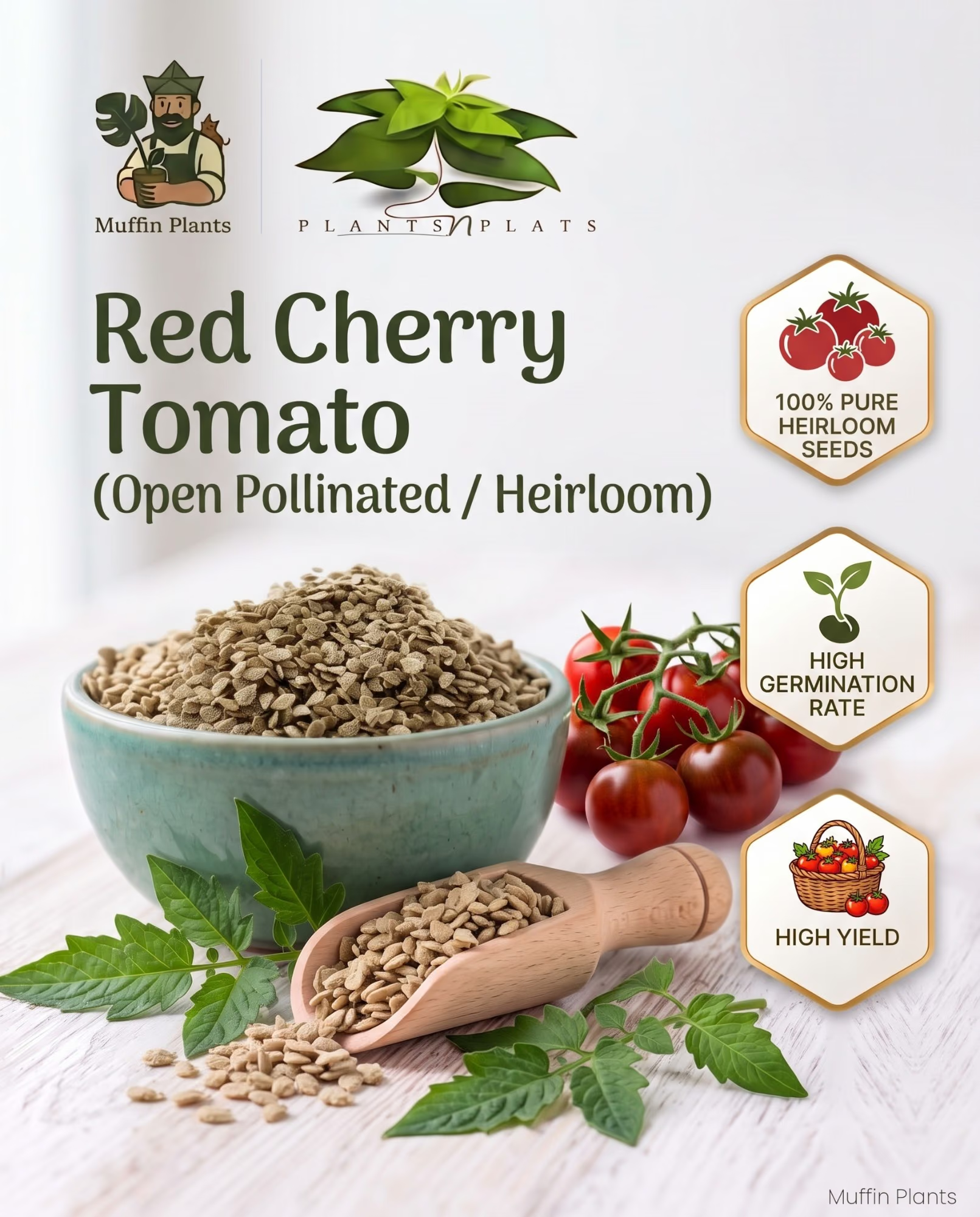
For those who appreciate heirloom characteristics, this open-pollinated red cherry tomato delivers true, old-world flavor and the ability to save seeds year after year. The vines are sprawling and highly productive, setting clusters of small, juicy red fruits with thin skins and a perfectly balanced acid-to-sugar ratio. They are the quintessential traditional garden snack, perfect for fresh eating, roasting, or preserving.
Light
Give it the sunniest spot you have, with a minimum of 6 hours of direct light each day. When summer temperatures soar in Karachi, Lahore or Multan, a light shade net over the afternoon hours protects flowers and fruit.
Water
Water deeply and consistently, about 2.5 to 4 cm a week, more in hot weather and daily for pots in peak summer. Swings between dry and soaked soil cause splitting and blossom end rot, so keep the supply as even as you can.
Humidity
Comfortable in average humidity. Very humid air encourages fungal disease and can affect pollination, so stake plants, prune for airflow and water at soil level, especially during Karachi's monsoon months.
Temperature
Adapts to most of Pakistan's growing weather, thriving at about 15 to 35 C and flowering most freely between 18 and 32 C. Through 35 C+ spells keep them going with afternoon shade, mulch and steady watering, and expect fruit set to pick up again as it cools. Sow from late January to March, or in August for autumn fruit.
Pets and children
Fully ripe tomatoes are fine for people, and the ASPCA lists the ripe fruit as non-toxic for pets. The foliage, stems and unripe green fruit carry solanine and tomatine, so keep pets away from the plant as these can cause drooling, vomiting and lethargy if eaten.
Soil
Well drained, rich soil with a neutral to slightly acidic pH. A mix of garden soil, aged compost and cocopeat works well, and pots should hold 20 litres or more for deep roots.
Fertilizer
Feed moderately rather than heavily. Use a low nitrogen tomato fertiliser at planting, again when fruit set is well under way, and after the first picking, to avoid lots of leaves with few fruits. Open pollinated plants vary a little from plant to plant, and you can save seed from your best fruit for next season.
No reviews yet. Be the first to tell others how it went.