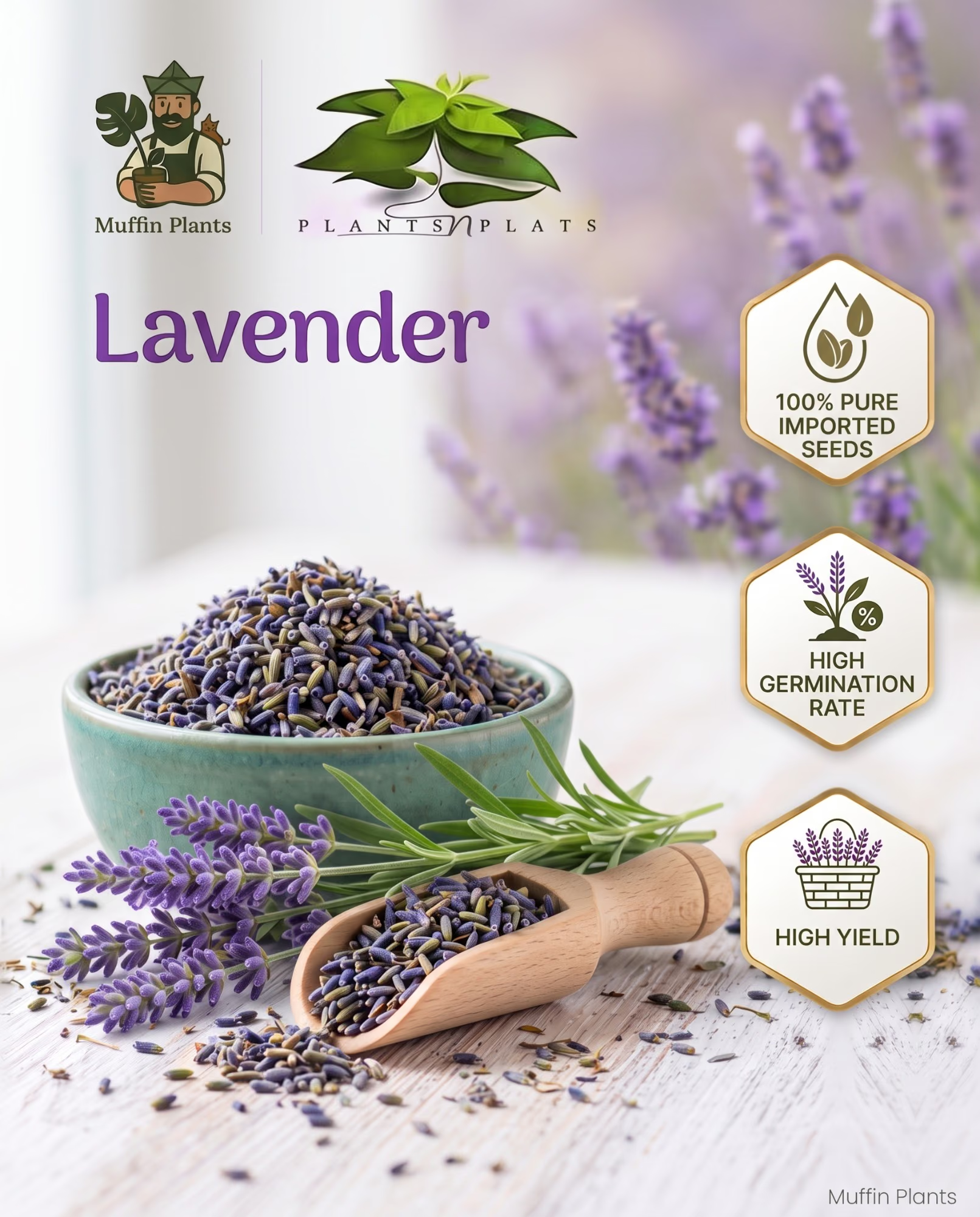
Seeds
A fragrant, drought-tolerant perennial herb perfect for borders and attracting pollinators.
Known for its soothing aroma and striking purple floral spikes, lavender is a hardy perennial that thrives in well-draining soil and full sun. It acts as an excellent pollinator magnet, drawing bees and butterflies to the garden while naturally deterring pests. The blooms can be harvested and dried for culinary uses, homemade teas, or aromatic sachets.
Light
Needs full sun, at least 6 to 8 hours a day, to flower well and keep its silvery foliage compact. A south or west facing spot suits it, with a little afternoon shade for young plants during peak summer heat in Karachi or Lahore.
Water
Water young plants regularly until established, then only when the soil has dried out thoroughly, usually every 10 to 14 days. Overwatering is the most common cause of loss, so water at the base and never leave the pot sitting in a saucer of water.
Humidity
Prefers dry air and dislikes prolonged humid heat, which invites root and leaf fungus. Through Karachi's humid monsoon months give it good airflow, wider spacing and a raised or terracotta pot, and avoid wetting the foliage.
Temperature
Thrives in warm, dry weather and handles Pakistan's heat well, growing comfortably from about 10 to 35 C. Above 35 C it keeps going with afternoon shade and sharp drainage. Seed is slow and germinates best at around 21 to 24 C, so sow in autumn or early spring and expect the first flowers the following season.
Pets and children
Safe to handle, and the flowers are edible in culinary amounts for people. The ASPCA lists lavender as toxic to dogs and cats because of linalool and linalyl acetate, which can cause nausea, vomiting and loss of appetite if the plant is chewed.
Soil
A lean, sharply draining, slightly alkaline mix works best, such as garden soil blended with coarse sand or perlite and only a little compost. Plant it slightly raised in a terracotta pot or mound so water never collects around the crown.
Fertilizer
Lavender needs very little feeding. A light dose of balanced, low nitrogen fertiliser in early spring is enough, since too much feed gives soft leafy growth at the expense of the flower spikes.
No reviews yet. Be the first to tell others how it went.