Seeds
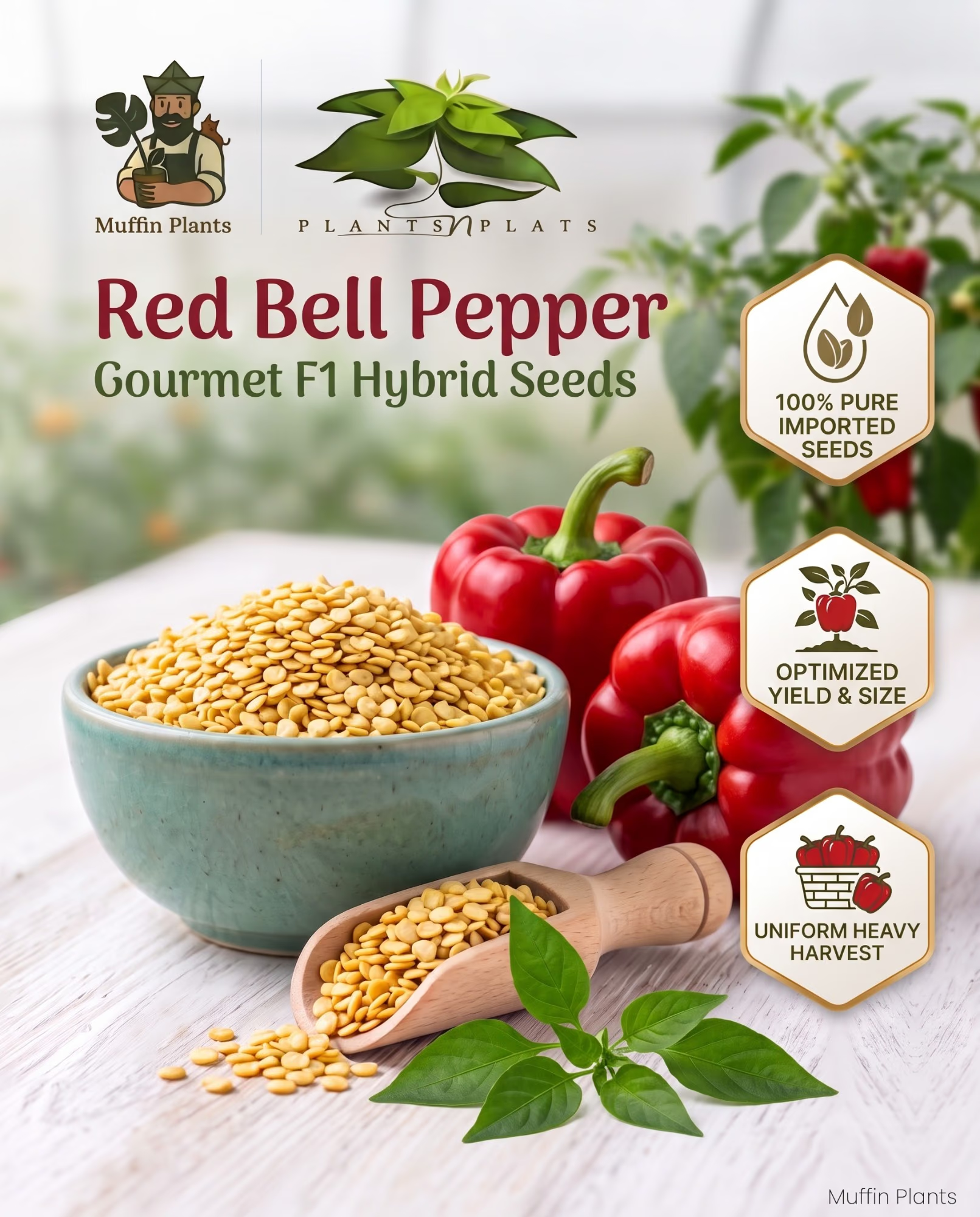
Exceptionally sweet, thick-walled red bell peppers with high disease resistance.
This premium hybrid variety is bred to produce a heavy yield of large, perfectly blocky peppers that ripen to an intense, glossy red. The flesh is exceptionally sweet and crisp, offering a superior flavor profile compared to standard grocery store varieties. The plants are robust and highly resistant to common pepper diseases, ensuring a reliable and bountiful harvest until the first frost.
Light
Grows best with 6 to 8 hours of direct sun, which gives sturdy plants and a heavier crop. In Pakistan's peak summer a light shade cloth over the afternoon hours prevents sunscald on the fruit and blossom drop. Leave the fruits on the plant to ripen from green to a deep, glossy red.
Water
Give a deep soak when the top 2 to 3 cm of soil dries out, which is typically every 2 to 3 days in the ground and daily for summer containers. Uneven watering or drought causes blossom and bud drop, so mulch to keep moisture steady.
Humidity
Does best in moderate, comfortable humidity. Very humid or very dry air can interfere with pollination and flower set, so water at the base, allow good airflow and avoid heavy overhead watering.
Temperature
Thrives across roughly 18 to 35 C, setting its heaviest crop when days sit at about 21 to 30 C. In 35 C+ heat it keeps growing under shade net, though blossoms may drop until temperatures ease and set resumes afterwards. Sow from January to March for spring fruiting.
Pets and children
The peppers themselves are edible and safe for people. Pepper plants belong to the nightshade family, and the leaves and stems can irritate the stomach of pets if chewed, so keep dogs and cats away from the foliage.
Soil
Plant in warm, free draining soil that is moderately fertile and compost rich, at a pH of around 6.0 to 6.8. Use a mix of garden soil, vermicompost and cocopeat, and a deep pot of at least 30 cm if growing in a container.
Fertilizer
Begin with a balanced fertiliser that is low in nitrogen, such as 5-10-10, because excess nitrogen produces foliage at the expense of fruit. Side dress or give a liquid feed once fruits begin to set, and every 3 to 4 weeks after that.
No reviews yet. Be the first to tell others how it went.