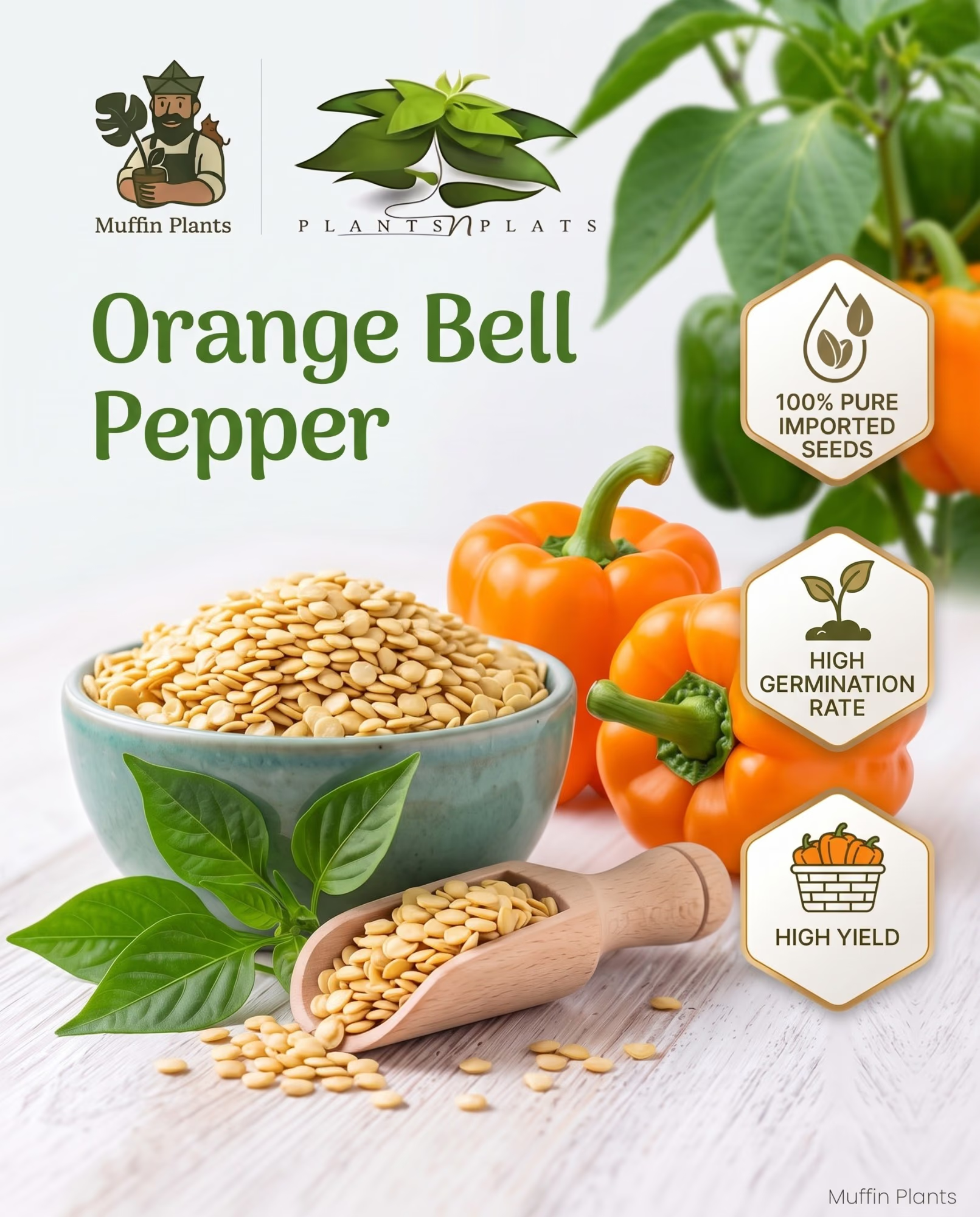
Seeds
Vibrant, thick-fleshed orange bell peppers that add a sweet, citrusy crunch to any dish.
This hybrid orange variety yields stunning, blocky fruits that are prized for their high vitamin C content and exceptionally sweet flavor profile. The plants are vigorous and set fruit well even in challenging weather, ripening to a glowing, deep orange hue. Their vibrant color and juicy, crisp texture make them a favorite for fresh eating, grilling, and gourmet culinary presentations.
Light
Grows best with 6 to 8 hours of direct sun, which gives sturdy plants and a heavier crop. During the hottest weeks a shade net across the afternoon sun protects the fruit from scald and the flowers from dropping. Leave the fruits on the plant to ripen from green to a glowing orange.
Water
Give a deep soak when the top 2 to 3 cm of soil dries out, which is typically every 2 to 3 days in the ground and daily for summer containers. Dry spells and big swings in moisture make buds and blossoms fall, so a layer of mulch helps keep the root zone even.
Humidity
Does best in moderate, comfortable humidity. Air that is extremely damp or extremely dry upsets pollination, so space plants for airflow and water at soil level instead of over the leaves.
Temperature
Thrives across roughly 18 to 35 C, setting its heaviest crop when days sit at about 21 to 30 C. Above 35 C give it afternoon shade and steady water and it will carry on, with flowers setting again as the heat eases. Sow between January and March for a spring crop, and again in late summer.
Pets and children
The peppers themselves are edible and safe for people. As members of the nightshade family, the plants have leaves and stems that can upset pets' stomachs if chewed, so keep the foliage out of reach of dogs and cats.
Soil
Plant in warm, free draining soil that is moderately fertile and compost rich, at a pH of around 6.0 to 6.8. A blend of garden soil, vermicompost and cocopeat works well, and container plants need a pot at least 30 cm deep.
Fertilizer
Begin with a balanced fertiliser that is low in nitrogen, such as 5-10-10, because excess nitrogen produces foliage at the expense of fruit. Once the first fruits form, side dress or give a liquid feed, repeating every 3 to 4 weeks.
No reviews yet. Be the first to tell others how it went.