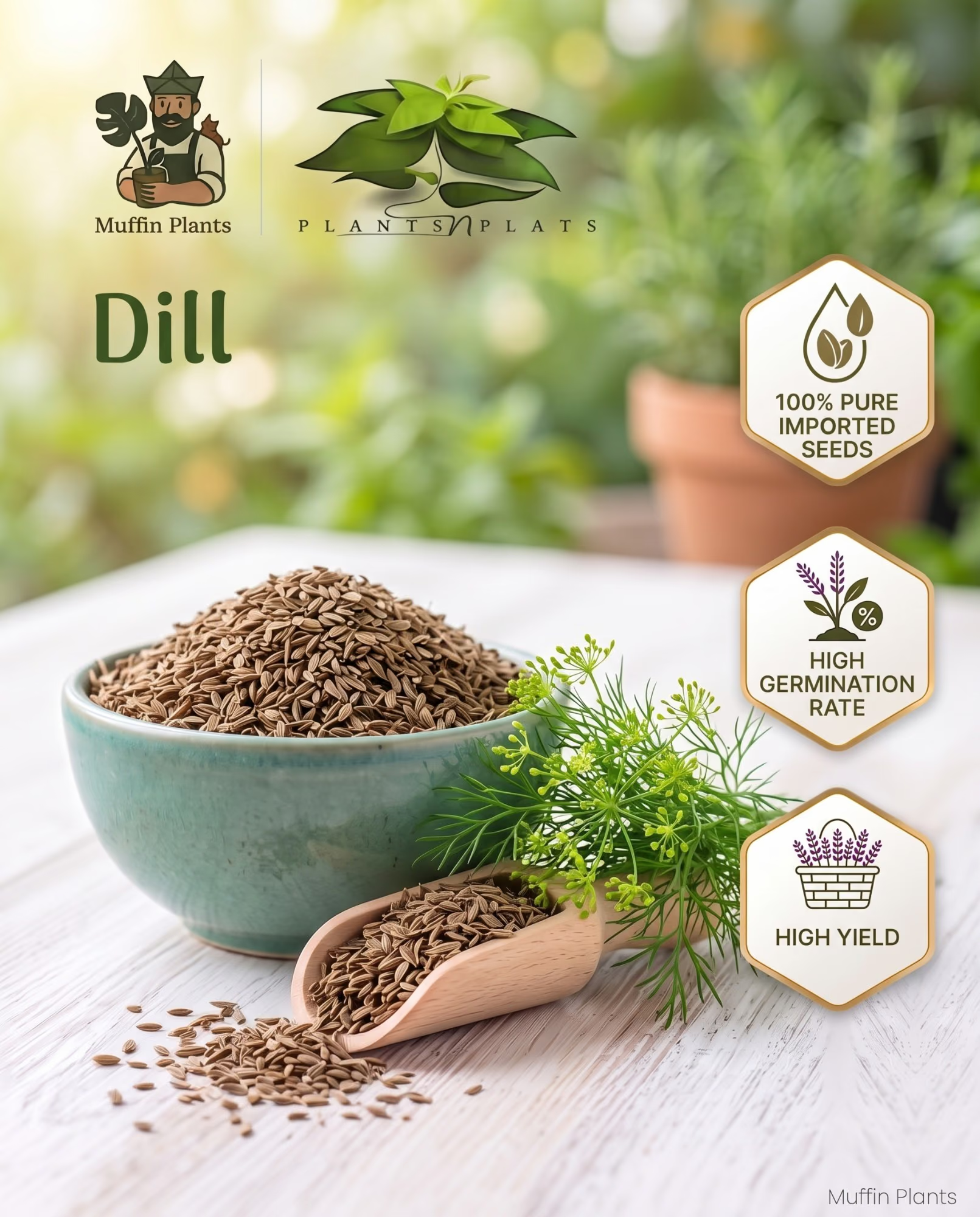
Seeds
A feathery, aromatic herb indispensable for pickling, salads, and seafood dishes.
Dill is a fast-growing annual herb known for its wispy, delicate fronds and sweet, anise-like flavor. It produces large, umbrella-shaped yellow flowers that are highly attractive to beneficial insects like ladybugs and swallowtail butterflies. Both the fresh leaves and the mature seed heads are highly valued in the kitchen, particularly for traditional pickling and flavoring fish.
Light
Needs full sun, 6 to 8 hours a day. In hot weather, morning sun with afternoon shade delays bolting, and a spot sheltered from strong wind protects the hollow stems.
Water
Keep the soil evenly moist but not soggy, about 2.5 to 5 cm of water a week and more in hot spells. Hot, dry weather makes dill bolt early, so water consistently if you are growing it for the leaves.
Humidity
Average humidity is fine. Water at the base and give plants room to breathe, since crowding and damp foliage encourage powdery mildew.
Temperature
Grows well from about 10 to 32 C, and in 35 C+ weather it carries on in afternoon shade, though it flowers sooner, so sow in small batches. Sow from October to March, directly where it will grow, as the delicate taproot does not transplant well.
Pets and children
Pet-safe
Soil
Well drained, loose, moderately fertile soil that is slightly acidic to neutral. Use a deep pot or bed so the taproot can develop, and blend garden soil with compost and some cocopeat.
Fertilizer
Dill is a light feeder. Compost mixed in at sowing is usually enough, or a balanced fertiliser applied once or twice in the season, since too much nitrogen gives weak growth and dulls the flavour.
No reviews yet. Be the first to tell others how it went.